


APBMT 2026 | Dr. Tong Wu's Team Reports Long-Term Outcomes of Allo-HSCT Using VP16/BU/Flu Conditioning in HLH
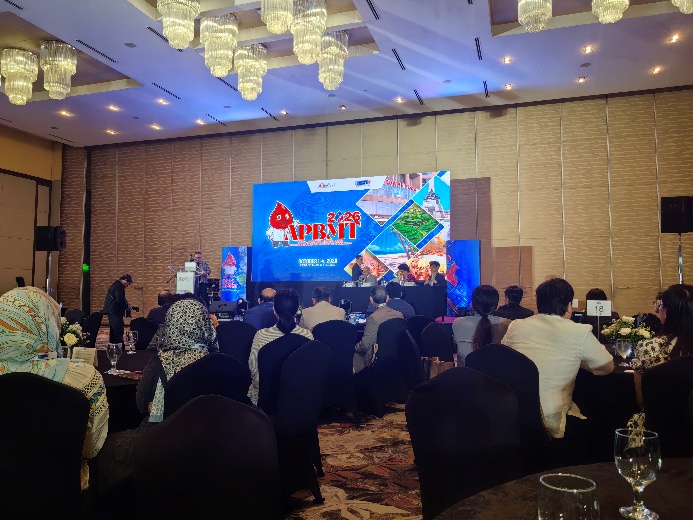
2026-10-16The 31st Annual Meeting of the Asia-Pacific Blood and Marrow Transplantation Group (APBMT 2026) was held in Manila, Philippines, from October 1 to 4, 2026.
A study by Dr. Tong Wu's team at Beijing GoBroad Boren Hospital, GoBroad Healthcare Group, titled “A Single-Center Report on allo-HSCT for HLH Using the VP16/BU/Flu Conditioning Regimen,” was selected for electronic poster presentation.
The study evaluated the feasibility and long-term outcomes of allogeneic hematopoietic stem cell transplantation (allo-HSCT) using a conditioning regimen combining etoposide (VP16), busulfan (BU), and fludarabine (Flu) in patients with primary or refractory/relapsed hemophagocytic lymphohistiocytosis (HLH).
Study Information
Title: A Single-Center Report on allo-HSCT for HLH Using the VP16/BU/Flu Conditioning Regimen
First Author: Zhanxiang Liu
Corresponding Author: Tong Wu
Institution: Beijing GoBroad Boren Hospital, GoBroad Healthcare Group
Presentation Type: E-Poster
Background
Hemophagocytic lymphohistiocytosis (HLH) is a rare, potentially life-threatening hyperinflammatory syndrome. Allo-HSCT is an important treatment option for patients with primary HLH or refractory/relapsed disease. However, no universally accepted conditioning regimen has been established for this patient population.
Methods
This single-center study included five patients with primary or refractory/relapsed HLH who underwent allo-HSCT following VP16/BU/Flu conditioning.
The conditioning regimen consisted of etoposide (VP16) at 300 mg/m² on days 1–3, busulfan (BU) at 0.8 mg/kg every six hours on days 1–3, and fludarabine (Flu) at 30 mg/m² on days 1–5.
All patients received graft-versus-host disease (GVHD) prophylaxis with cyclosporine A (CSA), mycophenolate mofetil (MMF), short-course methotrexate (MTX), and antithymocyte globulin (ATG).
Results
The study included four male patients and one female patient, aged 17–52 years.
Two patients had primary HLH associated with pathogenic variants in the LYST and UNC13D genes, respectively. The remaining three patients had refractory HLH secondary to Epstein–Barr virus (EBV) infection.
Before transplantation, the two patients with primary HLH had stable disease, while the three patients with EBV-associated HLH had active disease.
Donor types included one matched sibling donor (MSD), one matched unrelated donor (MUD), and three haploidentical donors (HID).
Four patients successfully achieved hematopoietic engraftment. Neutrophil engraftment occurred between days +11 and +19, while platelet engraftment occurred between days +10 and +19.
All four patients developed mild acute GVHD involving the skin, gastrointestinal tract, or liver. No moderate or severe acute GVHD was reported.
Other complications included one case of urinary tract infection with ureteral calculi, one case of cytomegalovirus (CMV) viremia, two cases of hemorrhagic cystitis, and one case of femoral head necrosis.
One patient died from pulmonary embolism on day −1, before stem cell infusion.
The remaining four patients were alive at the latest follow-up, ranging from 84 to 96 months, with no HLH relapse reported.
Conclusion
This single-center experience suggests that VP16/BU/Flu conditioning may be a feasible approach for allo-HSCT in selected patients with primary or refractory/relapsed HLH.
The long-term relapse-free outcomes observed in four patients are encouraging. However, further studies involving larger patient populations are needed to evaluate the safety and effectiveness of this conditioning strategy.


