






Overview
Melanoma is a highly malignant tumor originating from melanocytes. It is most commonly found on the skin, but can also occur on mucosal surfaces such as the oral cavity, nasal cavity, and rectum. Among all types of skin cancer, melanoma has the highest invasiveness and metastatic potential.
In recent years, the global incidence of melanoma has been steadily increasing. Its distribution varies across populations:
- In Asian populations, acral lentiginous melanoma (commonly on the palms, soles, or under the nails) and mucosal melanoma (occurring in the mouth, nasal cavity, or rectum) are more common.
- Among Caucasian populations in Europe and North America, superficial spreading melanoma is most common, followed by nodular melanoma.
Common Symptoms and Warning Signs
Melanoma often presents as changes in an existing mole or pigmented lesion—such as asymmetry, irregular borders, uneven color, diameter greater than 6 mm, or rapid changes in size, thickness, bleeding, or itching. New dark or black patches on the palms, soles, or under the fingernails and toenails also warrant close attention.
Diagnosis and Staging
A definitive diagnosis of melanoma requires pathological examination, typically through excision of the suspicious lesion. After diagnosis, staging is based on tumor thickness, lymph node involvement, and the presence of distant metastasis.
Doctors may also recommend a sentinel lymph node biopsy—which examines the first lymph node likely affected by cancer—as well as imaging tests such as CT, PET-CT, or MRI, to assess disease extent and guide treatment decisions.
Treatment Options
Melanoma treatment is tailored according to disease stage and individual patient characteristics. The major treatment approaches include:
Surgery
Surgery is the primary treatment for early-stage melanoma. Removing the tumor can significantly control disease progression. Some patients may also require lymph node evaluation or postoperative adjuvant therapy.
Local Therapies
For patients with locally recurrent or regionally metastatic melanoma of the limbs, Isolated Limb Infusion (ILI) may be used. This technique delivers high concentrations of chemotherapy directly to the affected limb, improving local control while minimizing systemic toxicity.
Radiotherapy
Radiotherapy may be used for unresectable tumors, or to treat metastases—especially in the brain or other specific sites.
Chemotherapy
Although a traditional approach, chemotherapy is now mostly reserved for patients who cannot tolerate or do not respond to other treatments.
Targeted Therapy
For melanoma with specific gene mutations, targeted therapies can block tumor growth pathways. These medications are often used in combination with other treatments to delay resistance and improve durability of response.
Immunotherapy
By activating the body’s own immune system to attack cancer cells, immune checkpoint inhibitors have become a cornerstone treatment for advanced melanoma and are also used as adjuvant therapy in some high-risk early-stage cases. Clinical studies show that immunotherapy enables a subset of patients to achieve long-term remission.
Why Choose GoBroad?
The melanoma program at GoBroad Healthcare Group (GoBroad) is led by internationally renowned expert Professor Guo Jun, one of the earliest pioneers in melanoma specialty development in China. He established the foundation for melanoma subspecialty care nationwide and has continuously represented China on major global academic stages such as ASCO and ESMO.
In 2025, Professor Guo was re-elected as Vice President of the Melanoma World Society (MWS)—the first Asian scholar to serve two consecutive terms—contributing to global strategies for melanoma diagnosis and treatment on behalf of China and Asia.
Under his leadership, the GoBroad melanoma team has driven multiple innovative therapies to approval in China, with research incorporated into authoritative international guidelines including NCCN and ESMO. The team continues to shape national standards through leadership in guideline development and updates. Guided by international best practices, GoBroad has built a mature, comprehensive treatment system to offer standardized and personalized care for each patient.
What You Can Expect at GoBroad:
Comprehensive Treatment System
A combined therapeutic approach centered on immunotherapy and targeted therapy.
Expertise in Refractory and Recurrent Melanoma
Strong focus on advanced, complex, and relapsed cases, delivering industry-leading outcomes.
Multidisciplinary Team (MDT) Model
MDT consultations provide standardized, evidence-based pathways for difficult cases.
Full-Cycle Management
From precise diagnosis and individualized treatment to follow-up and recurrence prevention, patients receive continuous, integrated care.
Our Achievements
Advancing Clinical Research
Led by Professor Guo Jun, the team has initiated over 70 clinical studies, contributing to the approval of 7 innovative melanoma drugs in China, offering new options to patients with refractory or recurrent disease.
Innovative Treatment Strategies
- Development of genomic profiling (BRAF, NRAS, C-KIT, etc.) to customize targeted and immunotherapy combinations
- Establishing a triplet regimen (camrelizumab + apatinib + temozolomide) as an effective first-line treatment for metastatic acral melanoma, achieving an overall response rate (ORR) of 64%, providing patients with durable deep responses
- Demonstrating significant benefits of PD-1 inhibitor + targeted therapy combinations for metastatic acral melanoma, helping to define a globally recognized new standard
- Pioneering the world’s first oncolytic virus + immunotherapy neoadjuvant regimen for high-risk acral melanoma, featured on the cover of STTT
Driving Guideline Updates
GoBroad’s research has been published in top international journals and presented at major conferences such as ASCO and ESMO. Many of these findings have been incorporated into NCCN and ESMO guidelines, shaping updates to global standards.
Setting International Standards
Professor Guo’s team established the global staging criteria for mucosal melanoma and defined new standards for adjuvant and first-line therapy in advanced disease. These breakthroughs have been adopted internationally and translated directly into clinical practice, providing high-risk patients—especially those with mucosal melanoma—with more precise pathways and long-term therapeutic benefits.
The efficacy data are derived from published studies and GoBroad Healthcare Group’s long-term follow-up results. For medical reference only. Individual outcomes may vary depending on disease type and treatment plan. Please consult with a qualified physician for a personalized treatment strategy.
Patient Stories
Yury, a 44-year-old melanoma patient from Greece, had undergone years of systemic treatment following his diagnosis of advanced cutaneous melanoma. He received surgery, monoclonal antibody therapy, radiotherapy, and two different immune-combination regimens. Despite these extensive efforts, his disease continued to progress. By May 2025, imaging showed further spread to the liver, peritoneum, hilar region, and peripancreatic areas. Genetic testing revealed an NRAS Q61R mutation, a subtype known to respond poorly to conventional therapies, greatly limiting subsequent treatment options.
After multiple lines of therapy had failed, Yury came to GoBroad Healthcare Group seeking new possibilities. Professor Jun Guo and his team conducted a comprehensive assessment of his condition, treatment history, and molecular profile. Based on this evaluation, they designed a more targeted, personalized treatment plan built around Tunlametinib combined with immunotherapy, aiming to regain disease control by inhibiting the NRAS-MEK pathway.
Just six weeks after treatment initiation, his imaging results showed an encouraging shift. His overall tumor metabolic activity decreased dramatically, several previously active lesions became metabolically inactive, and no new lesions appeared—indicating a partial response.

For a patient with NRAS-mutant melanoma who had already exhausted several immunotherapy options, this represented a highly valuable therapeutic outcome. Yury shared that the confidence he had gradually lost during years of treatment was rekindled at GoBroad, and this therapy restored his belief that his disease could once again become manageable.


Seeking more suitable treatment options, Mr. Alexander, a melanoma patient from Russia, traveled abroad and arrived at GoBroad Healthcare Group. He was evaluated and treated by Professor Jun Guo—Discipline Leader in melanoma, sarcoma, and genitourinary oncology, and one of China’s leading authorities in these fields.
After a comprehensive assessment, Professor Guo developed a personalized treatment plan for Mr. Alexander, which included the use of Tunlametinib, a drug currently approved and available only in China. While this option renewed his sense of hope, he remained concerned about potential side effects.
To support him, the GoBroad patient-service team arranged a peer-to-peer conversation with another Russian patient who had previously undergone a similar treatment at GoBroad. Their open 20-minute discussion in their shared native language provided clarity, eased anxiety, and strengthened Mr. Alexander’s confidence in the plan ahead.
Before departing, he expressed his gratitude by gifting the team a set of traditional Russian Matryoshka dolls—a warm symbol of trust and appreciation toward Professor Guo and GoBroad.
At GoBroad Healthcare Group, we are dedicated to providing global patients with reliable access to needed therapies, while delivering compassionate, culturally responsive support throughout every step of their medical journey.
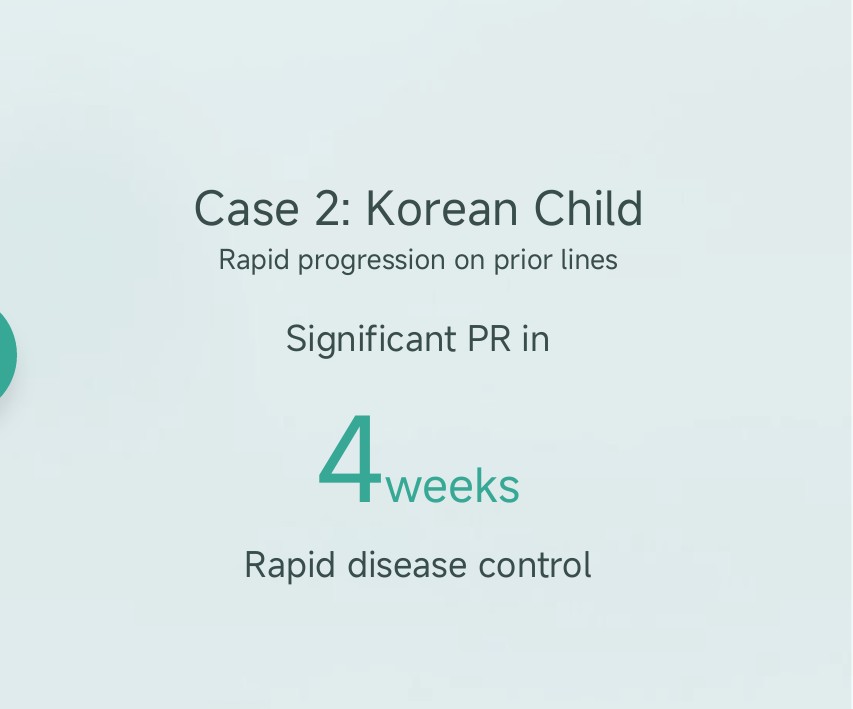
WU, a 10-year-old boy from Korea, was born with a large congenital skin lesion that gradually transformed into melanoma as he grew older. The disease progressed rapidly, and within a short period, the tumor enlarged significantly and was accompanied by serious complications that disrupted daily life. Genetic testing revealed an NRAS Q61H mutation. Multiple treatments—including immunotherapy, immune-combination regimens, and targeted therapy—had been attempted but failed to control the disease. The mass continued to grow, and extensive pleural effusion developed, severely affecting his quality of life.
At this critical point, WU’s mother reached out to the team of Professor Jun Guo at GoBroad Healthcare Group, hoping to find a new treatment opportunity for her child. After evaluating his weight, tolerance, and overall condition, Professor Guo’s team designed a personalized pediatric plan: Tunlametinib at half the standard adult dose combined with immunotherapy, aiming to maintain adequate NRAS-MEK pathway inhibition while ensuring safety for a young patient.
Within just four weeks of treatment, WU experienced noticeable improvement. The previously prominent axillary mass began to shrink, associated symptoms relieved markedly, and the concerning pleural effusion resolved. Follow-up imaging confirmed the positive changes, with no new lesions detected. The overall treatment course was gentle and well-tolerated, enabling the child to continue therapy with greater ease.
For a pediatric patient facing rapid disease progression after multiple unsuccessful treatments, this swift response was profoundly meaningful. It brought renewed hope to his family. The clinical team also observed that the half-dose regimen demonstrated both strong activity and favorable safety in NRAS-mutant pediatric melanoma, offering valuable insights for future dose-optimization studies in children.


