Dr. Chunfu LI

Dr. Chunfu LI

  • Chief Physician, Professor
  • President, GoBroad Chunfu Institute of Hematology & Oncology
Request an Appointment

About the Doctor

Dr. Chunfu Li has dedicated more than 40 years to pediatrics and pediatric hematology and is internationally recognized as a leading expert in pediatric hematopoietic stem cell transplantation (HSCT). His clinical and research expertise spans thalassemia, various forms of childhood leukemia and lymphoma, congenital bone marrow failure syndromes, primary immunodeficiency disorders, inherited metabolic diseases, and other pediatric hematologic conditions. He is highly experienced in stem cell transplantation, immunotherapy, and comprehensive management of complex hematologic diseases.

Dr. Li completed advanced training at several world-renowned institutions, including St. Jude Children’s Research Hospital, MD Anderson Cancer Center, the Pesaro Transplant Center in Italy, and Kansai Medical University in Japan. He has published extensively and has been invited to present at major international conferences such as ASH and EBMT, playing a pivotal role in advancing the global field of pediatric HSCT.

In the field of thalassemia transplantation, Dr. Li pioneered and continuously refined a series of innovative, original treatment strategies, positioning China at the forefront of global practice. He established a standardized and reproducible transplantation system that significantly improved engraftment success and long-term survival. His team further innovated the "double-insurance" transplant model and advanced the TCRαβ-depleted Haplo-HSCT (TDH) platform, transforming severe thalassemia from a high-risk condition into one that is now considered highly curable. These breakthroughs mark important milestones in the history of global pediatric transplantation and have enabled thousands of children to regain healthy lives.

Areas of Expertise

  • Hematopoietic stem cell transplantation for pediatric thalassemia, leukemia, lymphoma, and other hematologic diseases
  • Individualized transplantation strategies for severe and complex pediatric hematologic disorders
  • Immunotherapy and transplant-integrated treatment approaches
  • Management of graft-versus-host disease (GVHD) and severe transplant-related infections
  • Standardized diagnosis and treatment of congenital bone marrow failure syndromes and primary immunodeficiency diseases

Contact information and location

Whatsapp
+86 15901185120
Address
Taixin Hospital,No.2 Taixin Road,Lixin Management District,Dongcheng District,Dongguan City,Guangdong,China

Related reading

Youzi (Age 3), China – Diamond-Blackfan Anemia (DBA)

At the end of February 2022, two life-changing events came to a young family almost simultaneously. While the new parents joyfully welcomed their newborn daughternicknamed Little Youzi (pseudonym)they were immediately confronted with heartbreaking news. From birth, Little Youzi appeared extremely pale. Repeated blood tests over several days showed persistent abnormalities, and doctors suspected an anemic disorder.

After a series of genetic tests and bone marrow examinations, she was ultimately diagnosed with congenital pure red cell aplasia, Diamond-Blackfan Anemia (DBA)a rare hereditary disorder of childhood characterized by failure of erythropoiesis, where the bone marrow cannot produce enough red blood cells to support normal growth and development.

Initial treatment with corticosteroids yielded poor results, and Little Youzi began regular blood transfusions. While transfusions could temporarily sustain her, they did not improve her condition. Her growth and development lagged significantly behind her peers, causing her parents deep concern.

In April 2024, the family sought help from Professor Chunfu Li, a renowned pediatric hematopoietic stem cell transplantation (HSCT) expert, had successfully treated multiple cases of DBA with transplantation. After thorough evaluation, Little Youzi underwent TDH transplantationa haploidentical allogeneic HSCT with T-cell depletion (ex vivo T-cell removal). This strategy not only addressed the lack of a fully matched donor but also reduced the risk of graft rejection.

Although she experienced adenovirus infection and gastrointestinal complications post-transplant, the medical teams expertise and attentive care guided her through the critical period. Gradually, her laboratory indices normalized, and she was discharged in stable condition. This milestone signified that her once paralyzed red cell factory had successfully restarted, enabling her to produce healthy red blood cells independently and freeing her from lifelong dependence on transfusionsmarking a victorious battle for survival.


Case Summary Little Youzi (3 years old)

Diagnosis: Congenital pure red cell aplasia Diamond-Blackfan Anemia (DBA)

l  2022: Diagnosed with DBA at 3 months of age; initiated steroid therapy and regular blood transfusions.

l  April 2024: First consultation at Chunfu Research Institute; pre-transplant evaluation completed.

l  June 2024: Admitted for transplantation; underwent TDH haploidentical allogeneic HSCT with ex vivo T-cell depletion.

l  August 2024: Discharged post-transplant; continued outpatient follow-up.

l  Now: One year post-transplant, recovering well and living at home.

View
Characteristics of anti-CLL1 based CAR-T therapy for children with relapsed or refractory acute myeloid leukemia:the multi-center efficacy and safety interim analysis

C-type lectin-like molecule-1 (CLL1) is preferentially expressed on acute myeloid leukemia (AML) stem cells and leukemic blasts, while showing limited expression on normal hematopoietic stem cells. This expression pattern makes CLL1 an attractive AML-associated antigen and a promising target for cellular immunotherapy. Preclinical studies have demonstrated that anti-CLL1 chimeric antigen receptor T (CAR-T) cells exhibit potent antitumor activity both in vitro and in AML xenograft mouse models, providing a strong rationale for clinical translation.

Building on these findings, investigators conducted a phase 1/2 clinical trial to evaluate autologous anti-CLL1 CAR-T cell therapy in pediatric patients with relapsed or refractory acute myeloid leukemia (R/R-AML), a population with limited treatment options and poor outcomes. Eight children with R/R-AML were enrolled in this study to assess the safety and preliminary efficacy of CLL1-targeted CAR-T therapy.

Following lymphodepletion conditioning, each patient received a single infusion of autologous anti-CLL1 CAR-T cells. The treatment was generally well tolerated. Cytokine release syndrome (CRS), a common toxicity associated with CAR-T therapy, was observed in all patients but remained limited to grade 1–2 severity. Importantly, no treatment-related deaths or life-threatening adverse events occurred, supporting the favorable safety profile of anti-CLL1 CAR-T therapy in this pediatric cohort.

Encouraging antileukemic activity was observed after CAR-T cell infusion. Four of the eight patients achieved a morphologic leukemia-free state (MLFS) with minimal residual disease (MRD) negativity. One patient achieved MLFS with persistent MRD positivity, while another reached complete remission with incomplete hematologic recovery (CRi) but remained MRD positive. One patient experienced partial remission, and one patient maintained stable disease; notably, this patient still demonstrated effective clearance of CLL1-positive AML blasts, indicating on-target biological activity of the CAR-T cells.

Collectively, these clinical outcomes suggest that anti-CLL1 CAR-T cell immunotherapy can induce meaningful responses in children with relapsed or refractory AML, including deep remissions in a subset of patients. Combined with its manageable toxicity profile, CLL1-targeted CAR-T therapy represents a promising and well-tolerated therapeutic option for pediatric R/R-AML.

This study highlights the potential of antigen-directed CAR-T strategies beyond CD19-positive malignancies and underscores GoBroad Healthcare Group's commitment to advancing innovative cellular immunotherapies for high-risk pediatric hematologic cancers through translational and clinical research.

Refer to the original: https://doi.org/10.1038/s41375-022-01703-0

View
Double Protection: GoBroad Chunfu Institute of Hematology & Oncology Builds a Defense Line Against Thalassemia for 60 Families!

About 350 million people worldwide carry the thalassemia gene.

In some regions of southern China, the carrier rate is as high as 16.8%.

Children with severe thalassemia require lifelong blood transfusions and iron chelation therapy, with annual treatment costs exceeding 100,000 RMB.

Behind these numbers are the heavy burdens of countless thalassemia patients.

To help thalassemia families better understand the disease, master caregiving skills, and improve quality of life, on August 16, 2025,  GoBroad Chunfu Institute of Hematology & Oncology hosted the public welfare event “Caring for Thalassemia”. Nearly 60 thalassemia families attended, building together a “defense line” against thalassemia.


Patient Stories: Transplantation as a New Beginning

“From the moment our child was diagnosed, our lives changed completely.”
On stage, a mother of two children with thalassemia from Jiangxi, China, spoke with a trembling yet resolute voice, recounting her family’s doubly difficult journey of overcoming thalassemia:
the worry upon first learning of the disease, the shock when both sisters were diagnosed, the crushing burden of medical expenses, and the anxiety before transplantation... The path of curing thalassemia through hematopoietic stem cell transplantation is far from easy, but it is a road leading to new life. Though filled with uncertainty and challenges, the family worked together to overcome every obstacle, and now they are on the verge of recovery and returning home.

Three thalassemia patients and their families from different cities in China also shared their battles against the disease and the joy of being cured at the Chunfu Research Institute. In the audience, families still struggling with thalassemia offered long and heartfelt applause, sending blessings to those about to begin a new life. These stories are not only about a few families, but also a reflection of the heartfelt hopes of countless thalassemia households for the future.


Medical Outreach: Using Expertise to Build a “Defense Line”

Scientific understanding of thalassemia is the first step in prevention, control, and improving patients’ quality of life. At the event, Director Liao Jianyun and Dr. Zhang Weiwei from Chunfu Institute explained and answered questions about the current status and progress of hematopoietic stem cell transplantation, as well as standardized transfusion and chelation therapy.

Director Liao emphasized that allogeneic hematopoietic stem cell transplantation is one of the most effective treatments for severe thalassemia. Chunfu Institute has performed over 1,400 transplants, with an overall survival rate of more than 97%. Haploidentical transplantation is now highly advanced. As long as parents are healthy, children may have the opportunity for transplantation.

For some severe and transfusion-dependent intermediate thalassemia patients, Dr. Zhang explained the importance of regular transfusion and iron chelation therapy. Standardized treatment and proper management of transfusion complications can ensure children's growth and development, while greatly improving survival and quality of life.

After addressing families’ questions on blood matching, transplantation preparation, and prenatal screening, Professor Li Chunfu and Director Liao provided free medical consultations. Long lines formed at the consultation tables, where doctors carefully reviewed reports, examined patients, and offered tailored treatment advice.
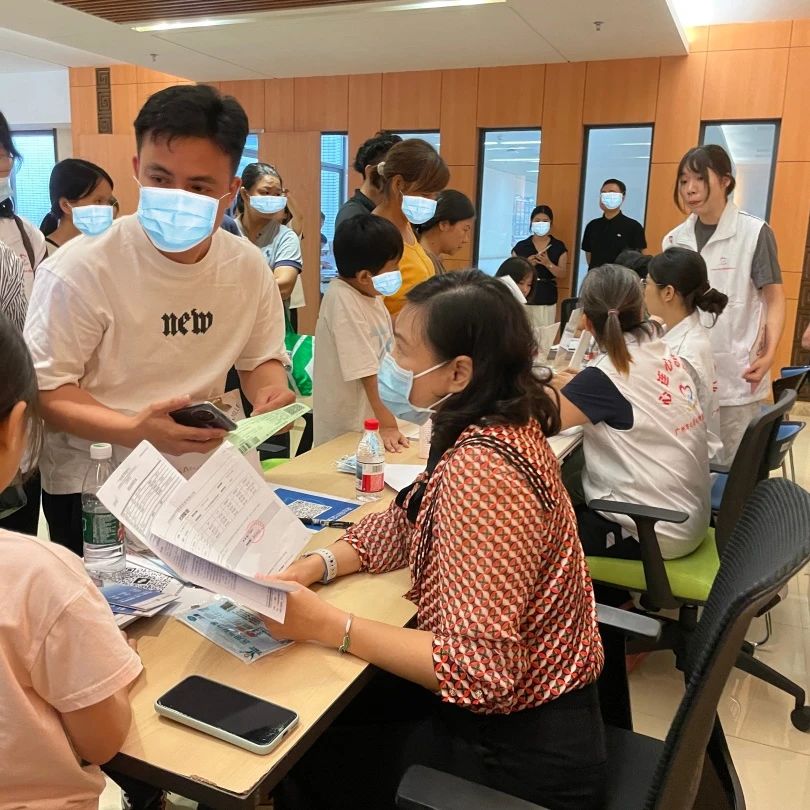
 

Public Welfare Support: Relieving Families' Burdens

Since its founding, GoBroad Nanfang Chunfu Research Institute has been committed to supporting thalassemia patients through free screenings, prevention training, fee reduction policies, and collaboration with foundations for financial aid—striving to help families overcome their medical and economic challenges.


Preventing and controlling thalassemia starts with action.

 

View

We're here for you.

Get in touch.

We're here to make sure you are connected to the right people.

Request an Appointment