Dr. Jing PAN

Dr. Jing PAN

  • Associate Chief Physician, MD, PhD (Immunology), Master’s Supervisor
  • Director, Department of Hemato-Oncology & Immunotherapy, Beijing GoBroad Hospital
Request an Appointment

About the Doctor

Dr. Jing Pan has more than 13 years of clinical experience in hematologic malignancies and immunotherapy and is one of China’s key contributors to the development of CAR-T cell therapy. With dual doctoral training in Medicine and Basic Immunology, she has long focused on CAR-T therapy and translational research, accumulating extensive experience in the management of relapsed/refractory acute lymphoblastic leukemia (R/R B-ALL and T-ALL/LBL).

Since 2017, Dr. Pan has been a pioneer in proposing a stratified CAR-T treatment model for B-ALL. She established a comprehensive complication-management system and long-term efficacy-monitoring framework for CAR-T therapy, while advancing multiple first-in-human and first-in-China CAR-T technologies into clinical practice. She has led or played major roles in clinical studies of CD19 CAR-T, CD22 CAR-T, sequential CD19/22 CAR-T, and the world’s first donor-derived CD7 CAR-T therapy for T-ALL/LBL—contributing significantly to the innovation and standardization of CAR-T therapy in China and worldwide.

Her research has been published in top-tier journals, including Nature Medicine, Journal of Clinical Oncology, Blood, Lancet Oncology, Leukemia, and Journal of Hematology & Oncology. Several of her publications have been selected as ESI Highly Cited Papers. She has also delivered numerous oral and poster presentations at international congresses such as ASCO, ASH, EHA, and JSH, establishing her as one of China’s most internationally recognized experts in the CAR-T field.

Areas of Expertise

  • CAR-T cell therapy for leukemia, lymphoma, and other hematologic malignancies
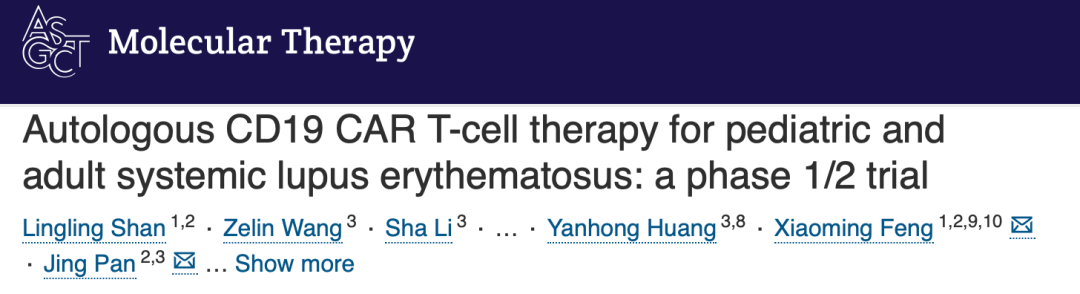
  • CAR-T therapy for autoimmune diseases
  • Precision diagnosis and stratified CAR-T treatment for R/R B-ALL and T-ALL/LBL
  • Management of CAR-T–related toxicities (CRS/ICANS) and long-term efficacy monitoring
  • Donor-derived CAR-T, autologous CAR-T, and multi-target CAR-T clinical innovation and translational research
  • Advanced CAR-T technological innovation, including CAR structural optimization and manufacturing process refinement

Contact information and location

Whatsapp
+86 15901185120
Address
Building 1,No.4 Science Park Road,Life Science Park,Changping District,Beijing,China

Related reading

Allogeneic CD5-specific CAR-T therapy for relapsed/refractory T-ALL: a phase 1 trial

Jing Pan, Yue Tan, Lingling Shan, Samuel Seery, Biping Deng, Zhuojun Ling, Jinlong Xu, Jiajia Duan, Zelin Wang, Kai Wang, Xinjian Yu, Qinlong Zheng, Xiuwen Xu, Guang Hu, Taochao Tan, Ying Yuan, Zhenglong Tian, Fangrong Yan, Yajing Han, Jiecheng Zhang & Xiaoming Feng


Abstract

Refractory or relapsed Tcell acute lymphoblastic leukemia (r/r T-ALL) patients have poor prognoses, due to the lack of effective salvage therapies. Recently, CD7-targeting chimeric antigen receptor (CAR)-T therapies show efficacy in patients with r/r T-ALL, but relapse with CD7 loss is common. This study evaluates a CD5-gene-edited CAR-T cell therapy targeting CD5 in 19 r/r T-ALL patients, most of whom had previously failed CD7 CAR-T interventions. CAR-T products were derived from previous transplant donors (Cohort A) or newly matched donors (Cohort B). Primary endpoints were dose-limiting toxicity at 21days and adverse events within 30days. Secondary endpoints were responses, pharmacokinetics and severe adverse events after 30days. A total of 16 received infusions, 10 at target dose of 1×10⁶kg1. All encountered grade34 cytopenias and one had a grade3 infection within 30days. All patients (100%) achieved complete remission or complete remission with incomplete blood count recovery by day30. At a median follow-up of 14.3months, four received transplantation; three were in remission and one died of infection. Of 12 untransplanted patients, 2 were in remission, 3 relapsed, 5 died of infection and 2 of thrombotic microangiopathy. CAR-T cells persisted and cleared CD5+ Tcells. CD5 Tcells, mostly CD5-gene-edited, increased but remained below normal levels. These results suggest this CD5-specific CAR-T intervention has a high remission rate for T-ALL patients. Evidence also suggests the risk of late-onset severe infection may be mitigated with consolidative transplantation. This study provides insights that could help to optimize this promising intervention.

Refer to the original: https://doi.org/10.1038/s41591-024-03282-2

View
Sequential CD19 and CD22 chimeric antigen receptor T-cell therapy for childhood refractory or relapsed B-cell acute lymphocytic leukaemia:a single-arm,phase 2 study

Relapse remains a major limitation of CD19-directed chimeric antigen receptor (CAR) T-cell therapy in children with relapsed or refractory B-cell acute lymphoblastic leukemia (B-ALL). Although CD19 CAR T-cell treatment can induce high initial remission rates, disease recurrence—often driven by antigen loss or lineage escape—continues to compromise long-term outcomes. In response to this challenge, investigators at GoBroad Healthcare Group explored a sequential CAR T-cell strategy targeting both CD19 and CD22 to enhance remission durability and reduce relapse risk in pediatric patients.

This phase 2 clinical study was conducted at Beijing GoBroad Boren Hospital and enrolled children and adolescents aged 1 to 18 years with relapsed or refractory B-ALL expressing high levels of both CD19 and CD22. Patients first received an intravenous infusion of CD19-directed CAR T cells. Once deep remission was achieved, defined as minimal residual disease–negative complete remission or complete remission with incomplete hematologic recovery, and after non-hematologic toxicities had resolved to an acceptable level, patients proceeded to CD22-directed CAR T-cell infusion. Both infusions were administered within a predefined target dose range designed to balance efficacy and safety.

Between May 2020 and August 2022, 81 pediatric patients were enrolled in the study. Nearly all patients completed the planned sequential treatment, with a median interval of just over one month between the two infusions. Among patients who received the target dose, the vast majority achieved an objective response within three months of initiating therapy, demonstrating the strong antileukemic activity of the sequential approach. With extended follow-up, survival outcomes remained favorable, with high rates of event-free survival, disease-free survival, and overall survival observed at 18 months.

The safety profile of sequential CD19- and CD22-directed CAR T-cell therapy was consistent with expectations for cellular immunotherapy in this population. The most common severe adverse events were hematologic toxicities, reflecting both prior treatment burden and on-target effects of CAR T-cell therapy. Cytokine release syndrome and neurotoxicity were generally manageable, and serious late non-hematologic toxicities were uncommon. Importantly, no treatment-related deaths were reported. Pharmacokinetic analyses confirmed robust in vivo expansion of CAR T cells following both infusions, and sustained B-cell aplasia in most evaluable patients indicated prolonged biological activity.

Collectively, these findings demonstrate that sequential targeting of CD19 and CD22 can induce deep and durable remissions with an acceptable safety profile in children with relapsed or refractory B-ALL. This strategy offers a promising approach to overcoming antigen escape and improving long-term disease control in a high-risk pediatric population. The study highlights GoBroad Healthcare Group’s continued leadership in advancing innovative CAR T-cell therapies and translating clinical research into meaningful outcomes for patients and families.

Refer to the original:https://doi.org/10.1016/S1470-2045(23)00436-9

View
Dr. Jing Pan and Collaborating Team: Phase II Results of Donor-Derived CD7 CAR-T Therapy for Pediatric and Adult r/r T-ALL/LBL Released

With the broad application of CAR-T therapy in B-cell malignancies, its exploration in T-cell malignancies—such as relapsed/refractory acute T-lymphoblastic leukemia (r/r T-ALL) and T-lymphoblastic lymphoma (LBL)—is also progressing. Among these efforts, CD7-targeted CAR-T cell therapy is considered one of the most promising directions.

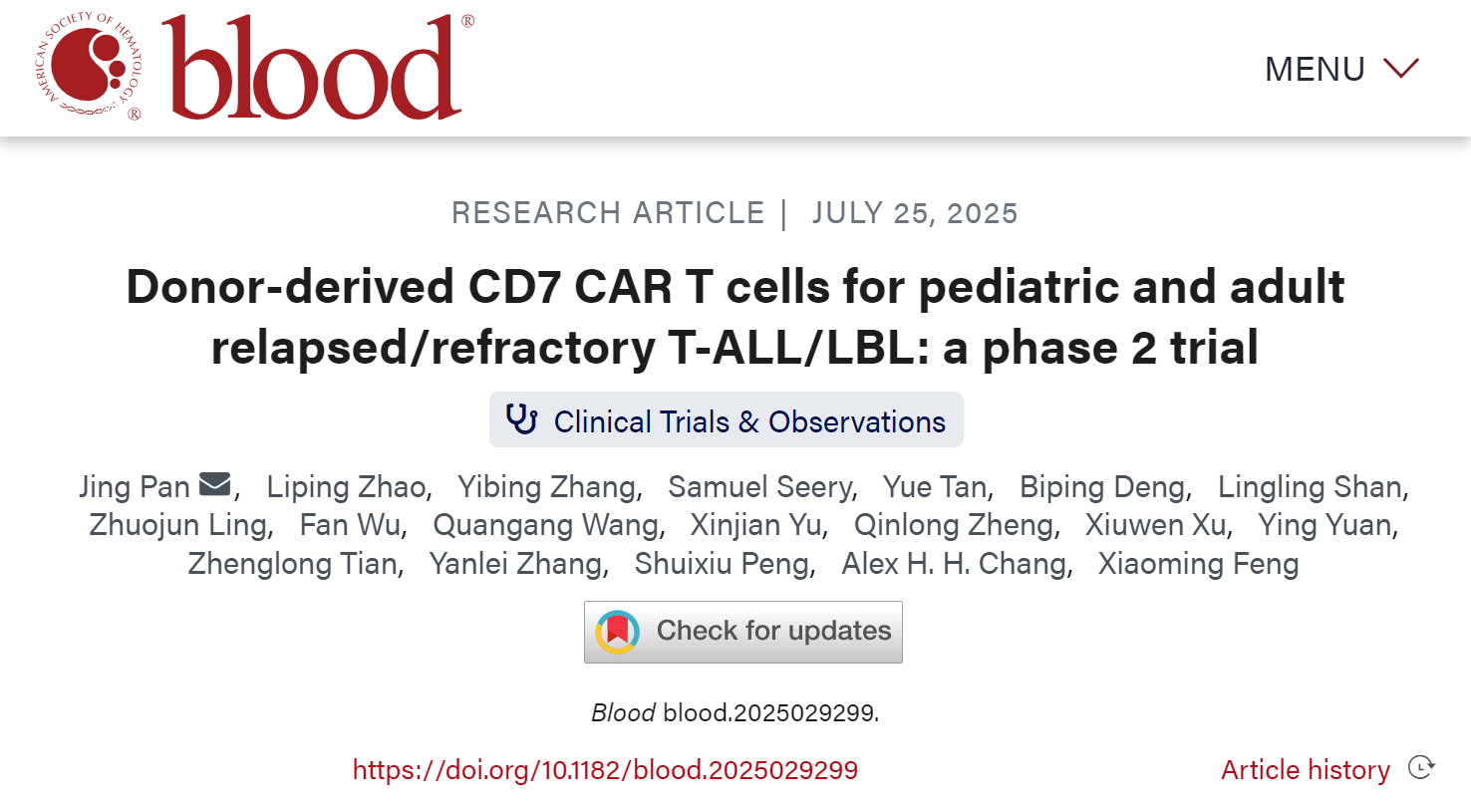
Recently, the internationally renowned hematology journal Blood published the Phase II clinical study results of donor-derived CD7 CAR-T therapy for pediatric and adult patients with r/r T-ALL/LBL. This multi-institutional study was conducted by Beijing GoBroad Hospital, the State Key Laboratory of Experimental Hematology, the National Clinical Research Center for Hematologic Diseases, the Institute of Hematology & Blood Diseases Hospital of the Chinese Academy of Medical Sciences, and Shanghai YaKe Biotechnology Co., Ltd., with Dr. Jing Pan and Dr. Xiaoming Feng as co-corresponding authors.

Previously, this collaborative team presented preliminary Phase I results as an oral presentation at the 2021 ASCO Annual Meeting, which was selected as a Highlight Abstract. The related findings were subsequently published in J Clin Oncol (Pan et al., J Clin Oncol. 2021;39(30):3340-3351) and J Hematol Oncol (Pan et al., J Hematol Oncol. 2023;16(1):34), receiving broad attention and high recognition in the field.

To further interpret the core findings and future directions of this Phase II study, we interviewed co-corresponding author Dr. Jing Pan from Beijing GoBroad Hospital for an in-depth discussion on the latest progress and clinical implications of donor-derived CD7 CAR-T therapy.
 

Upgraded Study Design: From Early Validation to Evidence Advancement


Q1: We noticed changes in the Phase II clinical design compared to Phase I, such as the primary endpoint. Could you share the objectives of this Phase II study and key updates in its design?

Dr. Pan: This Phase II study is a continuation and expansion of our earlier Phase I research. While Phase I focused on safety evaluation, Phase II shifted its emphasis to efficacy—particularly the real-world clinical benefits of donor-derived CD7 CAR-T therapy for r/r T-ALL/LBL patients.

Originally, the primary endpoint was set as overall response rate (ORR). However, during the trial, we observed that some patients with bulky extramedullary disease required more time to achieve antitumor effects. Certain patients did not reach CR at one month but subsequently achieved deep remission, especially those bridging to allo-HSCT. Using a single time-point ORR as the metric could not fully capture this dynamic.

Therefore, we adjusted the primary endpoint to “best overall response (BOR) within 3 months post-infusion.” This was not a simple statistical modification but a reflection of real-world therapeutic dynamics and clinical decision-making in donor CAR-T treatment. Although the adjustment faced challenges during manuscript submission, we insisted on keeping it because it truly reflects clinical reality.

Overall, this Phase II study not only expanded the sample size and strengthened evidence-based support but also realistically showcased the therapeutic value of donor-derived CD7 CAR-T in r/r T-ALL/LBL, laying a solid foundation for transitioning this strategy from “exploratory phase” to “optimization phase.”


Expanded Inclusion: Tackling the Challenge of Complex Lesions


Q2: Compared to Phase I, this Phase II trial significantly increased the proportion of patients with extramedullary disease—a population traditionally thought to respond poorly to CAR-T therapy. Why did you make this choice, and what insights does it provide?

Dr. Pan: We were relatively conservative about including patients with extramedullary disease in Phase I. However, in Phase II, we deliberately expanded to include such cases, particularly those with bulky mediastinal masses or multiple extramedullary lesions. This decision was driven by real-world clinical needs—if CAR-T therapy cannot address complex cases, its practical value will be limited.

Our findings indicated that patients with mediastinal masses ≥7 cm had poorer prognoses and that CAR-T alone was insufficient for rapid tumor clearance. Based on this, we have introduced a “CAR-T plus localized radiotherapy” approach, which has shown encouraging preliminary results.

I believe we must directly confront the heterogeneity of T-cell tumors seen in real practice. If CAR-T alone is inadequate, we should actively explore additional interventions.


Efficacy and Risks: The Real-World Profile of CAR-T


Q3: Overall, how would you assess the main findings of this Phase II study in terms of efficacy and safety? Were there any observations you consider internationally significant?

Dr. Pan: Donor-derived CD7 CAR-T demonstrated strong early efficacy—89% of patients achieved partial remission or better (BOR) within 3 months, consistent with Phase I results.

Key observations include:

  1. Infection risk beyond 30 days post-infusion: Some patients developed severe infections after remission due to T-cell functional defects. In response, we introduced CD7-KO lymphocyte infusion to accelerate immune recovery and reduce infection risk.
  2. Bulky mediastinal disease as a therapeutic bottleneck: CAR-T alone was insufficient, reinforcing the need for combined modalities such as radiotherapy.
  3. Non-relapse mortality due to immune imbalance: Some patients died from immune dysregulation despite effective CAR-T and successful transplant. Achieving controllable CAR-T activity—“switchable CAR-T”—remains an unmet need.


Immune Ecosystem Modulation: A Post-CAR-T “Second Line of Defense”


Q4: You have initiated CD7-KO lymphocyte infusion as an adjunct to CAR-T therapy. Can you share insights from this research and whether such approaches may become mainstream in the future?

Dr. Pan: CD7-KO lymphocyte infusion is used during delayed immune reconstitution after CAR-T, typically around day 30, when infection risk remains high. These cells persist for a median of 15–21 days, outperforming traditional DLI and showing benefit in viral infection control, including COVID-19–related encephalitis.

However, I consider this a transitional strategy. In the future, next-generation CAR-T products with controllable “on-off switches” may replace such interventions. Our research team is working toward this direction.


Future Directions: Safer, More Controllable, and Smarter CAR-T


Q5: As one of the leading global experts in CD7 CAR-T research, what do you see as the key breakthroughs needed for this therapy to truly benefit T-cell malignancy patients?

Dr. Pan: The top priority is safety. While cytokine release syndrome and neurotoxicity are largely manageable, cytotoxicity—especially prolonged myelosuppression—remains a central issue. Enhancing CAR-T safety is critical.

Equally important is achieving intelligent control. We need CAR-T products with genuine switch mechanisms—able to deactivate in high-infection-risk scenarios and reactivate when relapse risk rises. With ongoing integration of basic and clinical research, I believe substantial breakthroughs in safety, controllability, and functional optimization will make CAR-T a durable treatment option for T-cell malignancy patients.

View

We're here for you.

Get in touch.

We're here to make sure you are connected to the right people.

Request an Appointment