Dr. Lin SHEN

Dr. Lin SHEN

  • Chief Physician, Professor, PhD Supervisor
  • Chief Scientist, Beijing GoBroad Hospital
  • Discipline Leader of Gastrointestinal Oncology, Beijing GoBroad Hospital
Request an Appointment

About the Doctor

Dr. Lin Shen is an internationally recognized expert in gastrointestinal cancers and a leading figure in precision oncology and comprehensive management of digestive malignancies in China. With more than four decades of clinical and research experience in medical oncology, she completed advanced training at the National Institutes of Health (NIH/NIDDK) in the United States, establishing a strong foundation in both clinical practice and translational cancer research.

Dr. Shen is one of the earliest pioneers and key advocates of the multidisciplinary team (MDT) model for gastrointestinal cancers in China. She has extensive experience in preoperative staging, treatment decision-making, and postoperative management for gastrointestinal tumors, and has deep expertise in the diagnosis and treatment of esophageal cancer, gastrointestinal stromal tumors (GIST), neuroendocrine tumors, and pancreatic cancer.

In scientific research, Dr. Shen has long been dedicated to precision oncology, translational medicine, and clinical studies of novel anticancer therapies. She has led numerous international and domestic clinical trials and helped translate innovative findings into clinical practice. Her research has been widely cited and incorporated into major international and national clinical guidelines, including ESMO, NCCN, and CSCO, influencing clinical practice globally.

Dr. Shen has published extensively as first author or corresponding author in top-tier international journals such as Nature, BMJ, Nature Medicine, Lancet Oncology, and JCO. She has received multiple prestigious scientific awards as the first contributor, including the First Prize of the Chinese Medical Science and Technology Award, the First Prize of the Chinese Anti-Cancer Association Science and Technology Award, and the First Prize of the Hua Xia Medical Science and Technology Award. She has also been recognized as a Highly Cited Researcher globally, one of the Top 2% Scientists worldwide, and a Beijing Outstanding Contributor.

Areas of Expertise

  • Precision and individualized treatment of gastrointestinal cancers
  • Clinical research of novel anticancer therapies
  • Comprehensive management of gastric, colorectal, esophageal, pancreatic cancers, GIST, and neuroendocrine tumors
  • Development of multidisciplinary team (MDT)–based treatment strategies

Contact information and location

Whatsapp
+86 15901185120
Address
Building 1,No.4 Science Park Road,Life Science Park,Changping District,Beijing,China

Related reading

World First! Prof. Lin Shen's Team's CAR-T Gastric Cancer RCT Featured on the Headlines of The Lancet and Nature

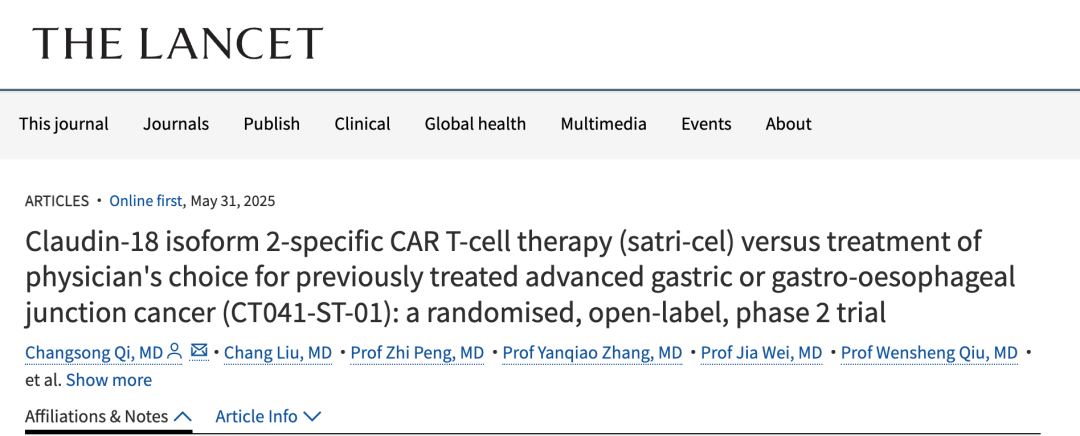
On June 1, 2025, the world's first randomized controlled trial (RCT) of CAR-T therapy for gastric cancer—"Claudin-18 isoform 2-specific CAR T-cell therapy (satri-cel) versus treatment of physician’s choice for previously treated advanced gastric or gastro-oesophageal junction cancer (CT041-ST-01): a randomised, open-label, phase 2 trial"—designed and led by Prof. Lin Shen’s team, was officially published in the prestigious international journal The Lancet (Impact Factor = 168.9). The study’s first author, Prof. Changsong Qi, also presented the positive findings in an oral session at the 2025 American Society of Clinical Oncology (ASCO) Annual Meeting, drawing widespread attention.
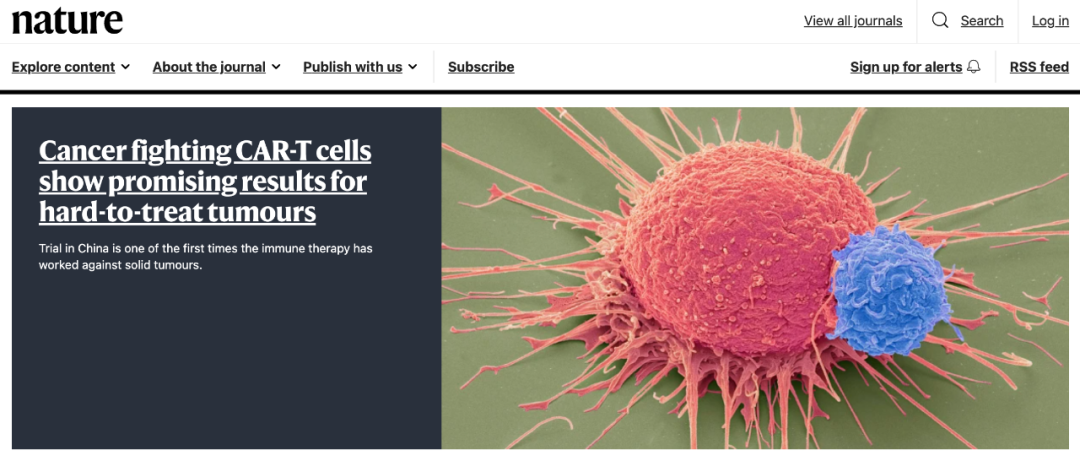
On June 3, the study results also made the headline on Nature’s official website.
 

Background

The CT041-ST-01 trial (NCT04581473) is the first randomized controlled clinical trial globally of CAR-T therapy targeting solid tumors. It evaluated the efficacy and safety of Satricabtagene Autoleucel (satri-cel)—a CLDN18.2-specific autologous CAR-T cell therapy—versus treatment of physician’s choice (TPC) in patients with previously treated advanced gastric or gastroesophageal junction cancer (G/GEJC).

CLDN18.2 is overexpressed in several gastrointestinal cancers and has emerged as a promising therapeutic target, especially in G/GEJC. Satri-cel showed encouraging results in a prior phase 1 trial involving patients with advanced G/GEJC who had failed standard therapies. The breakthrough results were published by Prof. Shen's team in Nature Medicine in June 2024 (Qi, C. et al. Nat. Med. 2024. doi: 10.1038/s41591-024-03037-z), laying a strong scientific foundation for advancing CAR-T in solid tumors. Building on these findings, the team launched the confirmatory phase 2 trial in CLDN18.2-positive G/GEJC patients who had failed at least two prior lines of therapy.


Study Design

This phase 2, open-label, multicenter, randomized controlled trial was conducted in China to compare the efficacy and safety of satri-cel versus standard therapies in CLDN18.2-positive (≥40% tumor cells with membrane staining intensity ≥2+) advanced G/GEJC patients who had failed at least two prior lines of therapy.

Eligible patients were randomized in a 2:1 ratio to receive:

  • Satricel group: up to 3 infusions of satri-cel (2.5×10^8 cells per infusion),
  • TPC group: treatment of physician’s choice (paclitaxel, docetaxel, irinotecan, nivolumab, or apatinib).
    TPC patients were allowed to cross over to receive CT041 upon progression or intolerance, at the investigator’s discretion.

The primary endpoint was progression-free survival (PFS) assessed by Independent Review Committee (IRC). The key secondary endpoint was overall survival (OS).


Results

As of October 18, 2024, a total of 156 patients were randomized into the study, comprising the intent-to-treat (ITT) population, including 104 patients in the satri-cel group and 52 patients in the treatment of physician’s choice (TPC) group. A total of 88 patients (84.6%) in the satri-cel group and 48 patients (92.3%) in the TPC group received the study treatment, forming the modified intent-to-treat (mITT) population. Among them, 20 patients in the TPC group subsequently received CT041 infusion. All participants had previously received at least two lines of therapy, with 26.9% in the satri-cel group and 19.2% in the TPC group having received three or more lines. The proportion of peritoneal metastasis was 69.2% vs 59.6%, respectively.

In the ITT population:
Based on evaluation by the Independent Review Committee (IRC), satri-cel significantly prolonged progression-free survival (PFS) compared to the control group (median PFS: 3.25 months vs 1.77 months; HR: 0.37, 95% CI: 0.24–0.56; p < 0.0001), achieving the primary endpoint of the study. At the same time, overall survival (OS) showed a clear trend toward benefit (median OS: 7.92 months vs 5.49 months; HR: 0.69, 95% CI: 0.46–1.05; one-sided p = 0.0416). Notably, even with 15.4% (16 patients) in the satri-cel group not receiving cell infusion and approximately 40% (20 patients) in the TPC group later receiving satri-cel, the CT041 group still demonstrated over 30% reduction in mortality risk.
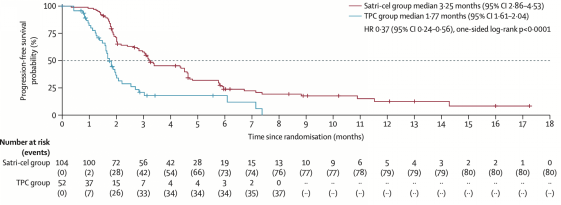
Primary Endpoint Achieved: PFS in ITT Population Shows Positive Results


In the mITT population (patients who actually received treatment): Based on IRC evaluation, median PFS in the satri-cel and TPC groups was 4.37 months vs 1.84 months (HR: 0.30, 95% CI: 0.19–0.47); median OS was 8.61 months vs 5.49 months (HR: 0.60, 95% CI: 0.38–0.94).
Therefore, among patients who actually received cell infusion, the therapeutic benefit of CT041 was even more pronounced.

It is worth noting that the median OS among the 20 TPC patients who subsequently received satri-cel was 9.20 months. Among all patients who received satri-cel infusion (n=108) from both groups, the median OS reached 9.17 months.

In terms of safety, satri-cel was generally well tolerated. Only 4 patients experienced grade 3 cytokine release syndrome (CRS); no grade 4 or 5 CRS occurred. No immune effector cell-associated neurotoxicity syndrome (ICANS) events were reported.


Conclusion

This study represents the first confirmatory randomized controlled trial of CAR-T therapy for solid tumors globally and marks a milestone in the field.

In CLDN18.2-positive G/GEJC patients who had failed at least two prior treatments, satri-cel significantly improved PFS and showed clinically meaningful OS benefits, with a manageable safety profile. The results strongly support satri-cel as a new third-line standard of care for advanced CLDN18.2-positive G/GEJC.


At the ASCO 2025 oral presentation, Prof. Changsong Qi told media:

"These results suggest that CLDN18.2 CAR-T therapy could transform the treatment landscape for advanced gastric cancer and offer a nearly unprecedented cell therapy option for solid tumors."

 

View
Chinese Research Shines on ASCO Stage, Resonating with the Global Oncology Community

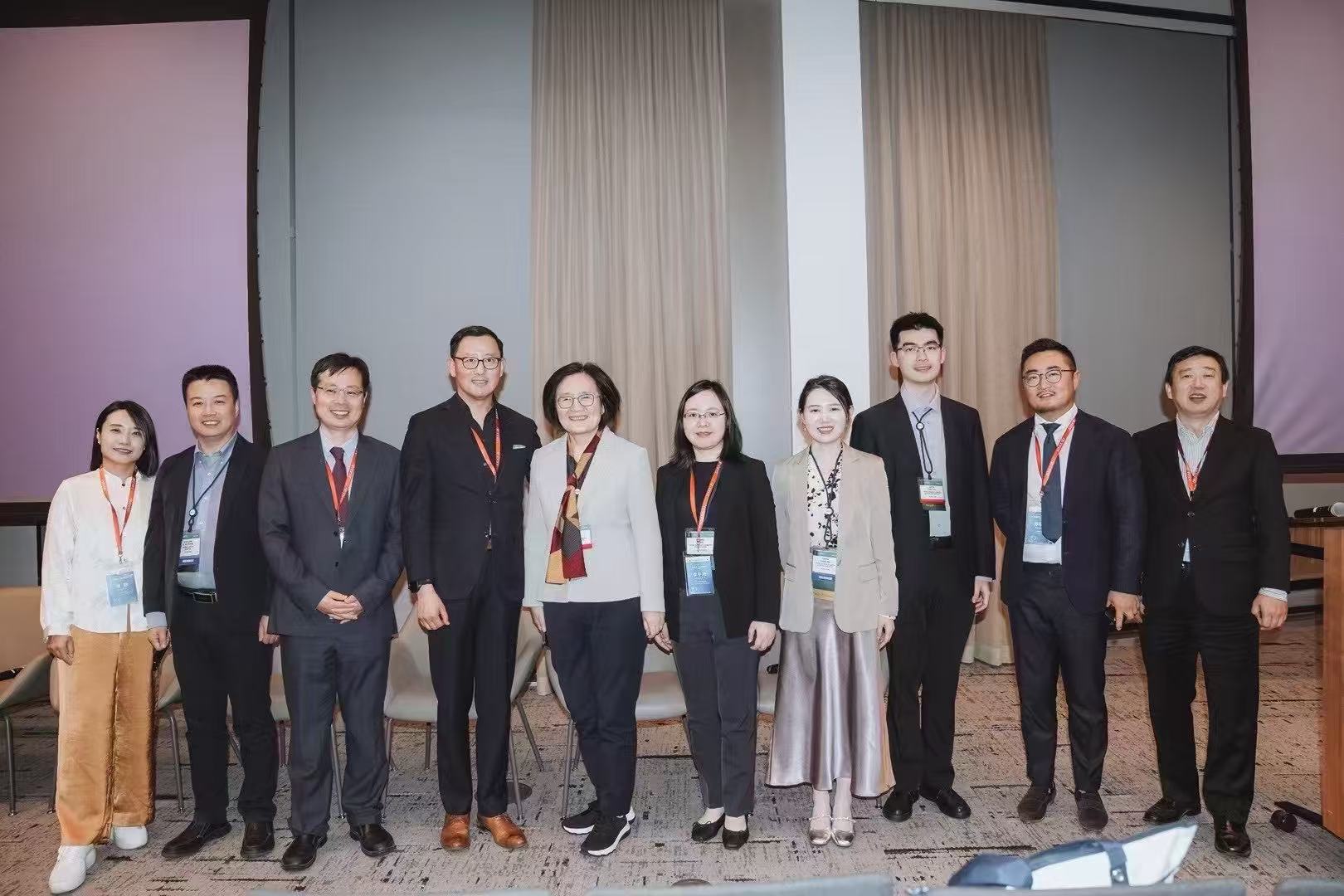
During the 2025 American Society of Clinical Oncology (ASCO) Annual Meeting, GoBroad Healthcare Group, in collaboration with multiple partners, successfully hosted the “CHINA SUMMIT” in Chicago. The event attracted over 200 leading global oncology scholars and industry representatives onsite, with the online livestream reaching over 50,000 professionals. It served as a crucial bridge linking Chinese innovation with the global oncology community.

This year, the number of presentations delivered by Chinese experts at ASCO reached a record high. The “CHINA SUMMIT” featured outstanding researchers selected for oral presentations and abstracts at ASCO 2025, along with top global experts. The summit offered a powerful platform for sharing Chinese voices and promoting international collaboration in oncology research.


Opening Remarks and Institutional Commitment

The summit was co-chaired by Professors Jun Guo and Lin Shen from Peking University Cancer Hospital. Professor Jun Guo delivered the opening address, highlighting the significant progress and continuous innovation of Chinese pharmaceutical and biotech companies. He noted that China's role in global multi-center clinical trials is growing, and expressed his honor in sharing Chinese research achievements and practical experiences with international peers.

Mr. Xiaoyu Zheng, CEO of GoBroad Healthcare Group, welcomed all guests and emphasized that with the evolution of global clinical research paradigms, China is emerging as a key hub for early-stage drug development. As a pioneer in China’s research hospital ecosystem, GoBroad is committed to building an integrated clinical research system, empowering global pharmaceutical companies with high-quality early clinical data, and accelerating the journey of new drugs from lab to market. GoBroad’s scientific team also supports translational medicine, strategic development, and scientific evaluation of candidate drugs. Mr. Zheng expressed hopes for deeper global collaboration to push the boundaries of medical science for the benefit of patients worldwide.


Frontline Echoes: Recapturing ASCO Highlights

The summit brought together experts featured in ASCO 2025’s oral sessions and abstract presentations. Professors Xinan Sheng, Changsong Qi, Jing Pan, and Dongmei Ji from top Chinese institutions gave keynote speeches, recapturing ASCO 2025’s highlights. They shared groundbreaking research findings, China’s latest innovations in oncology, and insights into global trends in new drug development. These discussions collectively painted a visionary blueprint for the future of precision cancer medicine.


In-Depth Dialogues: Exploring China’s One-Stop Solutions

An interactive discussion session allowed for open global dialogue. Moderated by Mr. Xiaoyu Zheng, Professors Guo, Sheng, Qi, and Pan engaged in a deep discussion on “Entering China’s One-Stop Solutions.” They showcased how Chinese researchers are influencing global trial design and efficiency, and how collaboration with enterprises bridges the gap from lab to clinic. As researchers from GoBroad’s affiliated hospitals, the panelists detailed how GoBroad provides comprehensive local support for international projects, and expressed eagerness to deepen partnerships with overseas pharmaceutical companies to co-create a global innovation ecosystem in cancer research and treatment.


Youth Spotlight: USCACA ASCO Travel Award Ceremony

The summit featured a special “2025 USCACA ASCO Travel Award” ceremony. Dr. Panpan Zhang and Dr. Haoxin Peng from Peking University Cancer Hospital received the award, which honors young Chinese scholars who made outstanding contributions in translational or clinical cancer research at ASCO 2025.


Closing Remarks and Future Outlook

Professor Lin Shen delivered the closing remarks, summarizing the summit’s highlights and envisioning the future landscape of global oncology drug development. He encouraged more young Chinese researchers to become bridges for international exchange and congratulated everyone on the summit’s successful conclusion.

At ASCO 2025 and the “CHINA SUMMIT,” GoBroad Healthcare’s management and research teams showcased their capabilities and engaged in meaningful exchanges with global enterprises, research institutions, and industry experts. GoBroad’s one-stop IIT (Investigator-Initiated Trial) experience for overseas enterprises garnered wide attention. Moving forward, Gaobo Healthcare Group will continue working with global partners to advance high-quality oncology drug development. Through innovative technologies and its research hospital platform, Gaobo aims to enhance clinical trial efficiency and help bring more breakthrough therapies to patients around the world.


View

We're here for you.

Get in touch.

We're here to make sure you are connected to the right people.

Request an Appointment