Dr. Jianyun LIAO

Dr. Jianyun LIAO

  • Chief Physician
  • GoBroad Chunfu Institute of Hematology & Oncology
Request an Appointment

About the Doctor

Dr. Jianyun Liao has more than 15 years of clinical experience in pediatric hematology, oncology, and hematopoietic stem cell transplantation (HSCT). She is recognized as one of the rising experts in China in the field of pediatric thalassemia transplantation and complex hematologic disease transplantation.

Dr. Liao has extensive experience in HSCT for a wide spectrum of conditions, including severe thalassemia, aplastic anemia, congenital immunodeficiency disorders, hemophagocytic lymphohistiocytosis (HLH), post-transplant immune hemolysis, graft dysfunction, and prolonged cytopenias.

Her clinical focus also includes the diagnosis and management of post-transplant complications, particularly in children undergoing allogeneic HSCT. She has substantial expertise in peri-transplant immunologic evaluation, donor selection, engraftment optimization, and long-term immune reconstitution management.

As a key investigator in multiple clinical and translational research projects, Dr. Liao has published numerous studies in leading international journals, including British Journal of Haematology, Blood, and Blood Advances. Her work has been showcased for many consecutive years at major international hematology conferences such as ASH, EHA, and EBMT, reflecting her growing influence in global pediatric transplantation research.Dr. Liao is also a recipient of the 2017 Soong Ching Ling Pediatric Award, one of the highest honors in Chinese pediatric medicine, recognizing her contributions to pediatric HSCT for thalassemia and other inherited hematologic diseases.

Areas of Expertise

  • Hematopoietic stem cell transplantation for pediatric hematologic diseases
  • HSCT for thalassemia, aplastic anemia and congenital immunodeficiency disorders
  • Management of post-transplant complications (immune hemolysis, graft failure, prolonged cytopenia)
  • Systematic management of transplant-related complications, including infections and GVHD
  • Long-term post-transplant care and immune reconstitution

Contact information and location

Whatsapp
+86 15901185120
Address
Taixin Hospital,No.2 Taixin Road,Lixin Management District,Dongcheng District,Dongguan City,Guangdong,China

Related reading

Double Protection: GoBroad Chunfu Institute of Hematology & Oncology Builds a Defense Line Against Thalassemia for 60 Families!

About 350 million people worldwide carry the thalassemia gene.

In some regions of southern China, the carrier rate is as high as 16.8%.

Children with severe thalassemia require lifelong blood transfusions and iron chelation therapy, with annual treatment costs exceeding 100,000 RMB.

Behind these numbers are the heavy burdens of countless thalassemia patients.

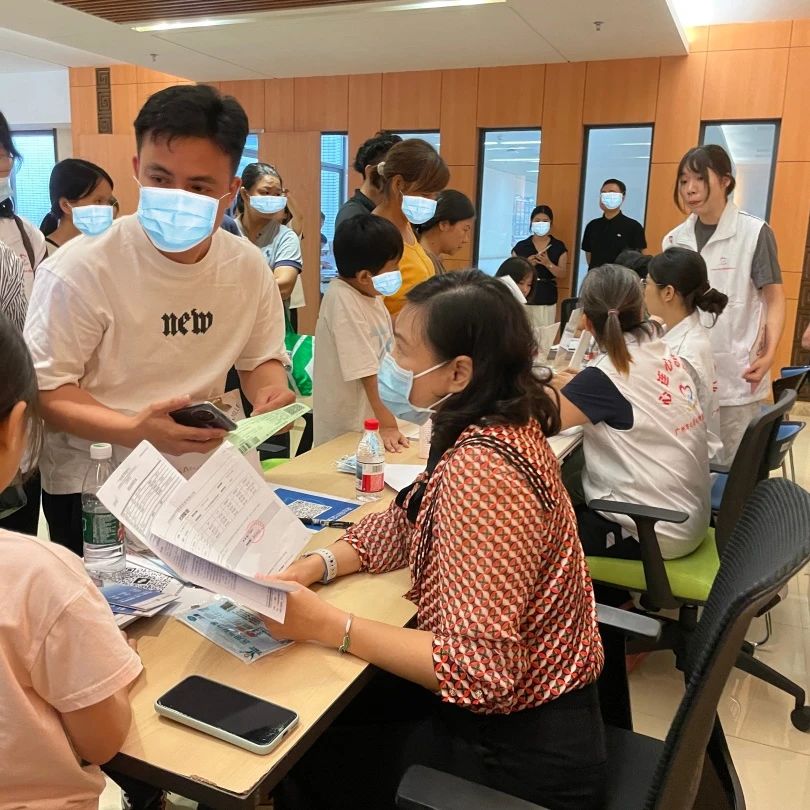
To help thalassemia families better understand the disease, master caregiving skills, and improve quality of life, on August 16, 2025,  GoBroad Chunfu Institute of Hematology & Oncology hosted the public welfare event “Caring for Thalassemia”. Nearly 60 thalassemia families attended, building together a “defense line” against thalassemia.


Patient Stories: Transplantation as a New Beginning

“From the moment our child was diagnosed, our lives changed completely.”
On stage, a mother of two children with thalassemia from Jiangxi, China, spoke with a trembling yet resolute voice, recounting her family’s doubly difficult journey of overcoming thalassemia:
the worry upon first learning of the disease, the shock when both sisters were diagnosed, the crushing burden of medical expenses, and the anxiety before transplantation... The path of curing thalassemia through hematopoietic stem cell transplantation is far from easy, but it is a road leading to new life. Though filled with uncertainty and challenges, the family worked together to overcome every obstacle, and now they are on the verge of recovery and returning home.

Three thalassemia patients and their families from different cities in China also shared their battles against the disease and the joy of being cured at the Chunfu Research Institute. In the audience, families still struggling with thalassemia offered long and heartfelt applause, sending blessings to those about to begin a new life. These stories are not only about a few families, but also a reflection of the heartfelt hopes of countless thalassemia households for the future.


Medical Outreach: Using Expertise to Build a “Defense Line”

Scientific understanding of thalassemia is the first step in prevention, control, and improving patients’ quality of life. At the event, Director Liao Jianyun and Dr. Zhang Weiwei from Chunfu Institute explained and answered questions about the current status and progress of hematopoietic stem cell transplantation, as well as standardized transfusion and chelation therapy.

Director Liao emphasized that allogeneic hematopoietic stem cell transplantation is one of the most effective treatments for severe thalassemia. Chunfu Institute has performed over 1,400 transplants, with an overall survival rate of more than 97%. Haploidentical transplantation is now highly advanced. As long as parents are healthy, children may have the opportunity for transplantation.

For some severe and transfusion-dependent intermediate thalassemia patients, Dr. Zhang explained the importance of regular transfusion and iron chelation therapy. Standardized treatment and proper management of transfusion complications can ensure children's growth and development, while greatly improving survival and quality of life.

After addressing families’ questions on blood matching, transplantation preparation, and prenatal screening, Professor Li Chunfu and Director Liao provided free medical consultations. Long lines formed at the consultation tables, where doctors carefully reviewed reports, examined patients, and offered tailored treatment advice.


Public Welfare Support: Relieving Families' Burdens

Since its founding, GoBroad Nanfang Chunfu Research Institute has been committed to supporting thalassemia patients through free screenings, prevention training, fee reduction policies, and collaboration with foundations for financial aid—striving to help families overcome their medical and economic challenges.


Preventing and controlling thalassemia starts with action.


View
Dr. Jianyun Liao: Redefining Treatment Paradigms to Tackle Post-Transplant Immune Hemolytic Disease

Hematopoietic stem cell transplantation (HSCT) remains the only potentially curative therapy for a variety of benign and malignant hematologic disorders. It is often considered a “restart button” for life by many patients. However, post-transplant immune hemolytic disease (IHD) continues to pose a persistent clinical challenge, particularly in pediatric patients.

At the GoBroadChunfu Institute of Hematology & Oncology, Professor Chunfu Li and Director Jianyun Liao are leading efforts to explore more precise and safer therapeutic approaches. Their findings have been presented on international academic stages such as the 2025 Annual Meeting of the European Society for Blood and Marrow Transplantation (EBMT) and the 2025 Korean Society of Hematology (ICKSH) Congress. In this interview, Dr. Jianyun Liao shares cutting-edge therapeutic concepts, clinical practice outcomes, and the humanistic motivations behind these innovations.

1. POST-HSCT IHD remains a clinical concern. Could you describe its typical clinical manifestations?

Dr. Jianyun Liao: POST-HSCT IHD is a serious complication with diverse clinical manifestations, typically associated with the hemolytic process. Patients may present with fatigue, pallor, and exertional palpitations or dyspnea—symptoms directly related to a rapid decline in hemoglobin levels. Specific signs of hemolysis include jaundice (yellowing of the skin and sclera), dark tea-colored urine (indicative of hemoglobinuria), and, in some cases, splenomegaly due to red blood cell fragment deposition. Systemic inflammatory responses—such as fever, back pain, or abdominal pain—may also occur, suggesting hemolysis-induced systemic inflammation.

Key laboratory indicators include:

  • Direct evidence of hemolysis: progressive decline in hemoglobin, marked elevation of indirect bilirubin and lactate dehydrogenase (LDH)
  • Compensatory hematopoietic response: increased reticulocyte count, although this may be blunted in cases of concurrent bone marrow suppression

Without timely intervention, IHD can lead to severe anemia, multi-organ damage, and potentially progress to multiple organ failure. Early recognition of symptoms and dynamic laboratory monitoring are critical to improving prognosis.

2. What are the underlying mechanisms of IHD? Why does it occur even in ABO-matched transplants?

Dr. Jianyun Liao: The pathogenesis of IHD is indeed complex. It involves newly formed auto- or alloantibodies in conjunction with T cell and cytokine-mediated inflammatory processes. Even with ABO compatibility, disparities in minor blood group antigens—such as Rh, Kell, and Duffy—can trigger the production of alloantibodies. These antibodies mediate red cell destruction through complement activation or monocyte-macrophage phagocytosis.

Another important factor is mixed chimerism. Residual recipient immune cells may continue to produce antibodies targeting donor red blood cells. Additionally, the use of immunosuppressive agents post-transplant may impair graft-versus-leukemia (GVL) effects, allowing residual recipient B cells to persist. Abnormal immune reconstitution (e.g., deficiency in regulatory T cells) can further lead to autoantibody generation against donor-derived red cell antigens. These interacting mechanisms contribute to the unpredictable and multifaceted nature of IHD.

3. In your view, do donor type and blood group incompatibility influence the incidence of POST-HSCT IHD?

Dr. Jianyun Liao: Absolutely. Donor type and blood group incompatibility have a significant impact on the incidence of immune hemolytic disease post-HSCT. Our retrospective analysis revealed that the incidence of hemolysis in patients with fully matched donors was 8.5%, markedly higher than in those with haploidentical donors (2.6%). Patients with mixed chimerism had an even higher incidence of hemolysis at 25.3%, compared to only 2.4% in those with complete donor chimerism. This suggests that the presence of recipient cells is a major contributing factor to IHD.

Additionally, the hemolysis rate in patients with major ABO mismatches (e.g., A→O, B→O, AB→O) was 8.8%, compared to 3.9% in patients with ABO-macthed donors. Particularly, transplants from A-type blood donors (such as A→O or A→B) had higher hemolysis rates. This is attributed to the longer half-life of anti-A isoagglutinins in the recipient and the higher immunogenicity of A antigens, which elicit a stronger host immune response. These findings indicate that antibodies driving hemolysis may predominantly originate from the recipient, underscoring the need to carefully consider donor type and blood group compatibility when planning treatment strategies.

4. Your team has applied strategies such as tapering immunosuppressants and donor lymphocyte infusion (DLI) to manage graft rejection in transfusion-dependent thalassemia patients. What comprehensive benefits do these strategies offer, especially for pediatric and adolescent patients?

Dr. Jianyun Liao: In some post-transplant patients, donor-recipient chimerism can lead to relapse of the primary disease if not addressed promptly. This is mechanistically similar to the management of hemolysis. Therefore, tapering immunosuppressants and administering DLI have brought significant clinical benefits in thalassemia patients.

Firstly, these strategies promote complete donor chimerism, helping to prevent disease relapse and ensuring long-term transplant success. Reducing or discontinuing immunosuppressants minimizes drug-related side effects such as infections, metabolic disturbances, and growth retardation—factors particularly crucial for children and adolescents. This improves both physical development and quality of life.

Secondly, our stratified treatment protocols allow precise control over the timing and dosing of DLI, thereby minimizing the risk of graft-versus-host disease (GVHD). Finally, these approaches help reduce psychological stress, enabling young patients to return to normal life more confidently. The combined physical and mental health benefits represent a holistic gain for pediatric and adolescent populations.

We believe these strategies offer renewed hope, protection, and an improved quality of life for more patients—especially children and adolescents. This, ultimately, is the most heartwarming goal of medical innovation.

View

We're here for you.

Get in touch.

We're here to make sure you are connected to the right people.

Request an Appointment