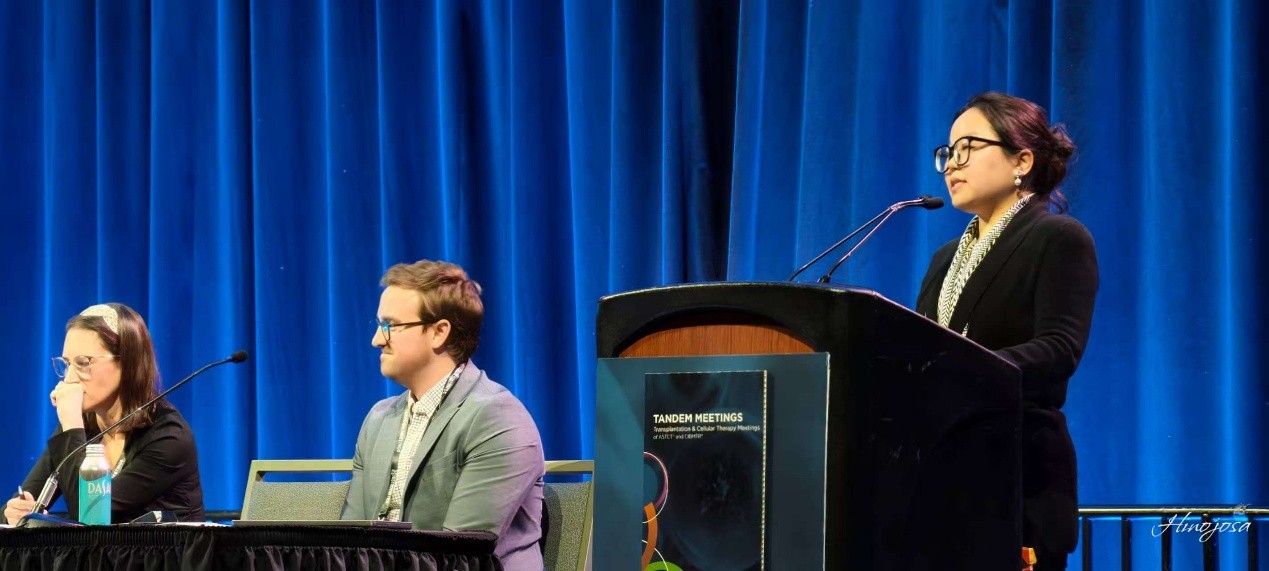
Director Huaying Liu from GoBroad Healthcare Group provides an in-depth interpretation of the core advantages of the TCRαβ-depleted haploidentical transplantation (TDH) platform, optimal timing of CAR-T bridging, immunomodulatory mechanisms of cord blood, and future directions of integrated therapeutic strategies.
Q1. Two of your studies focus on TCRαβ-depleted haploidentical transplantation (TDH), combined respectively with CAR-T bridging and “passenger cord blood” as enhancement strategies. Could you first summarize why TDH was chosen as the core transplant platform for patients with relapsed or refractory leukemia?
Our decision to adopt TDH as the core transplant platform is driven by three critical challenges we consistently face in clinical practice: infection, graft-versus-host disease (GVHD), and relapse.
In the field of haploidentical transplantation, three major representative approaches are currently used worldwide: the ATG-based “Beijing protocol,” the post-transplant cyclophosphamide (PT-CY)–based “American protocol,” and the TCRαβ ex vivo depletion–based “European protocol.” Our center adopts the third approach, namely TCRαβ ex vivo depletion (TDH).
The fundamental principle of TDH is the selective ex vivo removal of TCRαβ T cells using immunomagnetic separation. Since GVHD is primarily mediated by TCRαβ T cells, TDH achieves a depletion rate exceeding 90%, thereby significantly reducing the risk of both acute and chronic GVHD. As a result, some patients require no or only minimal GVHD prophylaxis after transplantation.
At the same time, the TDH platform typically allows the infusion of a high dose of CD34⁺ hematopoietic stem cells, leading to faster hematopoietic recovery. Neutrophil and platelet engraftment occur earlier, which helps reduce infection rates, decrease transfusion requirements, and lower the risk of bleeding-related complications, such as hemorrhagic cystitis.
Importantly, TDH is not a “complete T-cell depletion” strategy. While TCRαβ T cells are removed, NK cells and γδ T cells are preserved. These effector cells contribute to antiviral and anti-leukemic immunity. In addition, we minimize the use of immunosuppressive agents whenever possible to promote immune reconstitution and maintain the graft-versus-leukemia (GVL) effect.
Taken together, TDH offers structural advantages in addressing infection, GVHD, and relapse simultaneously, making it a foundational platform for the treatment of relapsed and refractory leukemia in our center.
Q2. In your study on CAR-T–bridged transplantation, you emphasized the importance of achieving MRD negativity before transplantation. What are the main challenges and key factors for success during the bridging phase from CAR-T infusion to transplantation?
In recent years, CAR-T bridging to TDH transplantation has become an important strategy for treating relapsed or refractory acute leukemia. Rather than relying on CAR-T therapy alone to achieve durable remission, the current paradigm emphasizes using CAR-T to achieve disease control followed by timely hematopoietic stem cell transplantation to secure longer-term disease-free survival.
In this process, optimal timing of transplantation is critical. Before proceeding to transplant, CAR-T–related complications must be adequately controlled, including cytokine release syndrome (CRS), immune effector cell–associated neurotoxicity syndrome (ICANS), and infections. Once the patient’s overall condition has stabilized, transplantation should be performed as early as feasible.
Based on long-term clinical data from our center, we have found that approximately 40 days after CAR-T infusion is often an appropriate bridging window. However, this varies by disease subtype. For example, patients with T-ALL treated with CD7 CAR-T tend to experience more profound immune and hematopoietic suppression, necessitating earlier transplantation. In contrast, the bridging window for B-ALL patients may be relatively longer. Overall, completing transplantation within three months is generally preferred, with individualized decisions based on each patient’s condition.
Another key factor is maintaining CAR-T functional activity before transplantation and ensuring that patients remain in an MRD-negative state, which is crucial for achieving durable disease-free survival.
Therefore, the major challenges during the bridging phase lie in infection control and standardized management of CRS, ICANS, and other complications, thereby creating optimal conditions for successful transplantation.
Q3. In your study on “passenger cord blood,” you innovatively administered cord blood both before and after transplantation. What was the rationale behind this design, and what anti-relapse potential did this dual-infusion strategy demonstrate?
First, it is important to clarify the concept of “passenger cord blood.” Unlike conventional cord blood transplantation, passenger cord blood is not intended for hematopoietic reconstitution, but rather is regarded as an immunobiologic product with broad antitumor activity.
The introduction of passenger cord blood was motivated by the observation that some patients fail to achieve optimal responses to CAR-T therapy alone and may not reach MRD negativity. Through retrospective analysis of previous cases, we observed differences between patients who received passenger cord blood and those who did not, particularly in terms of tumor clearance, MRD conversion to negativity, and disease-free survival.
Although other centers have reported combined cord blood infusion, these approaches are usually limited to concurrent or short-interval infusion with stem cells. Based on the TDH platform, we adopted differentiated infusion time points before and after transplantation, aiming to further enhance the GVL effect and enable deeper disease remission in high-risk patients.
Q4. What key insights do these two studies provide for the treatment of pediatric and adult relapsed/refractory leukemia, and how do you envision further optimization of this integrated treatment model in the future?
Relapsed and refractory leukemia remains a major therapeutic challenge in both pediatric and adult populations. Although frontline chemotherapy achieves favorable outcomes in pediatric ALL, prognosis declines sharply once patients enter the relapsed or refractory setting. Our goal is to secure long-term disease-free survival for these patients through more systematic and integrated treatment strategies.
From a clinical pathway perspective, we conceptualize integrated therapy as consisting of three stages:
Stage 1: Pre-transplant debulking and disease control.
Through CAR-T immunotherapy, combination with passenger cord blood, and modalities such as total marrow and lymphoid irradiation (TMLI), we aim to achieve deep remission and reduce tumor burden as much as possible to prepare for transplantation.
Stage 2: Transplantation centered on the TDH platform.
The TCRαβ-depleted TDH approach enables faster hematopoietic recovery, reduces reliance on immunosuppressive agents, and provides a more favorable platform for subsequent immunotherapeutic interventions.
Stage 3: Post-transplant consolidation and relapse prevention.
With a lower immunosuppressive burden, prophylactic donor lymphocyte infusion (DLI) can be implemented earlier. For selected high-risk patients, prophylactic CAR-T or other consolidation strategies may also be explored to further reduce relapse risk and improve long-term outcomes.
Throughout the entire process, treatment is individualized based on disease subtype, genetic background, and immune status. Data from our prior patient cohorts suggest that the integrated strategies presented at this year’s ASH meeting — including CAR-T, TDH, and passenger cord blood — are associated with a meaningful improvement in overall disease-free survival compared with historical controls. Looking ahead, we will continue to refine key strategies at each stage, striving to achieve higher disease-free survival while minimizing GVHD and relapse, so that more pediatric and adult patients can ultimately benefit.