Dr. Changsong QI

Dr. Changsong QI

  • Associate Chief Physician, MD
  • Department of Gastrointestinal Oncology, Beijing GoBroad Hospital
Request an Appointment

About the Doctor

Dr. Changsong Qi is a leading young expert in gastrointestinal oncology in China. With extensive experience on the clinical frontline, he has developed deep expertise in the comprehensive management of gastric cancer, colorectal cancer, and gastrointestinal stromal tumors (GIST). He has a strong forward-looking perspective in precision oncology and has led multiple breakthroughs in the treatment of digestive system tumors with rare gene fusions.

Dr. Qi is also an influential pioneer in the field of solid-tumor cell therapy. He is dedicated to overcoming key challenges in cellular immunotherapy for solid tumors and completed the world’s first randomized controlled trial of CAR-T cell therapy in solid tumors—an achievement regarded as a milestone in the field. His work has been presented multiple times at major international conferences such as ASCO and ESMO, drawing significant international attention.

His clinical and research efforts focus on cellular immunotherapy for solid tumors, standardized management of gastrointestinal cancers, and individualized treatment strategy development. In recognition of his outstanding contributions, he was selected for the “Qingmiao” Young Talent Program of the Beijing Municipal Health Commission.

Areas of Expertise

  • Comprehensive management of gastric cancer, colorectal cancer, and gastrointestinal stromal tumors (GIST)
  • Precision treatment of digestive tumors with rare gene fusions
  • Cellular immunotherapy for solid tumors (including CAR-T)
  • Standardized and individualized treatment planning for gastrointestinal cancers

Contact information and location

Whatsapp
+86 15901185120
Address
Building 1,No.4 Science Park Road,Life Science Park,Changping District,Beijing,China

Related reading

Chinese Research Shines on ASCO Stage, Resonating with the Global Oncology Community

During the 2025 American Society of Clinical Oncology (ASCO) Annual Meeting, GoBroad Healthcare Group, in collaboration with multiple partners, successfully hosted the “CHINA SUMMIT” in Chicago. The event attracted over 200 leading global oncology scholars and industry representatives onsite, with the online livestream reaching over 50,000 professionals. It served as a crucial bridge linking Chinese innovation with the global oncology community.

This year, the number of presentations delivered by Chinese experts at ASCO reached a record high. The “CHINA SUMMIT” featured outstanding researchers selected for oral presentations and abstracts at ASCO 2025, along with top global experts. The summit offered a powerful platform for sharing Chinese voices and promoting international collaboration in oncology research.


Opening Remarks and Institutional Commitment

The summit was co-chaired by Professors Jun Guo and Lin Shen from Peking University Cancer Hospital. Professor Jun Guo delivered the opening address, highlighting the significant progress and continuous innovation of Chinese pharmaceutical and biotech companies. He noted that China's role in global multi-center clinical trials is growing, and expressed his honor in sharing Chinese research achievements and practical experiences with international peers.

Mr. Xiaoyu Zheng, CEO of GoBroad Healthcare Group, welcomed all guests and emphasized that with the evolution of global clinical research paradigms, China is emerging as a key hub for early-stage drug development. As a pioneer in China’s research hospital ecosystem, GoBroad is committed to building an integrated clinical research system, empowering global pharmaceutical companies with high-quality early clinical data, and accelerating the journey of new drugs from lab to market. GoBroad’s scientific team also supports translational medicine, strategic development, and scientific evaluation of candidate drugs. Mr. Zheng expressed hopes for deeper global collaboration to push the boundaries of medical science for the benefit of patients worldwide.


Frontline Echoes: Recapturing ASCO Highlights

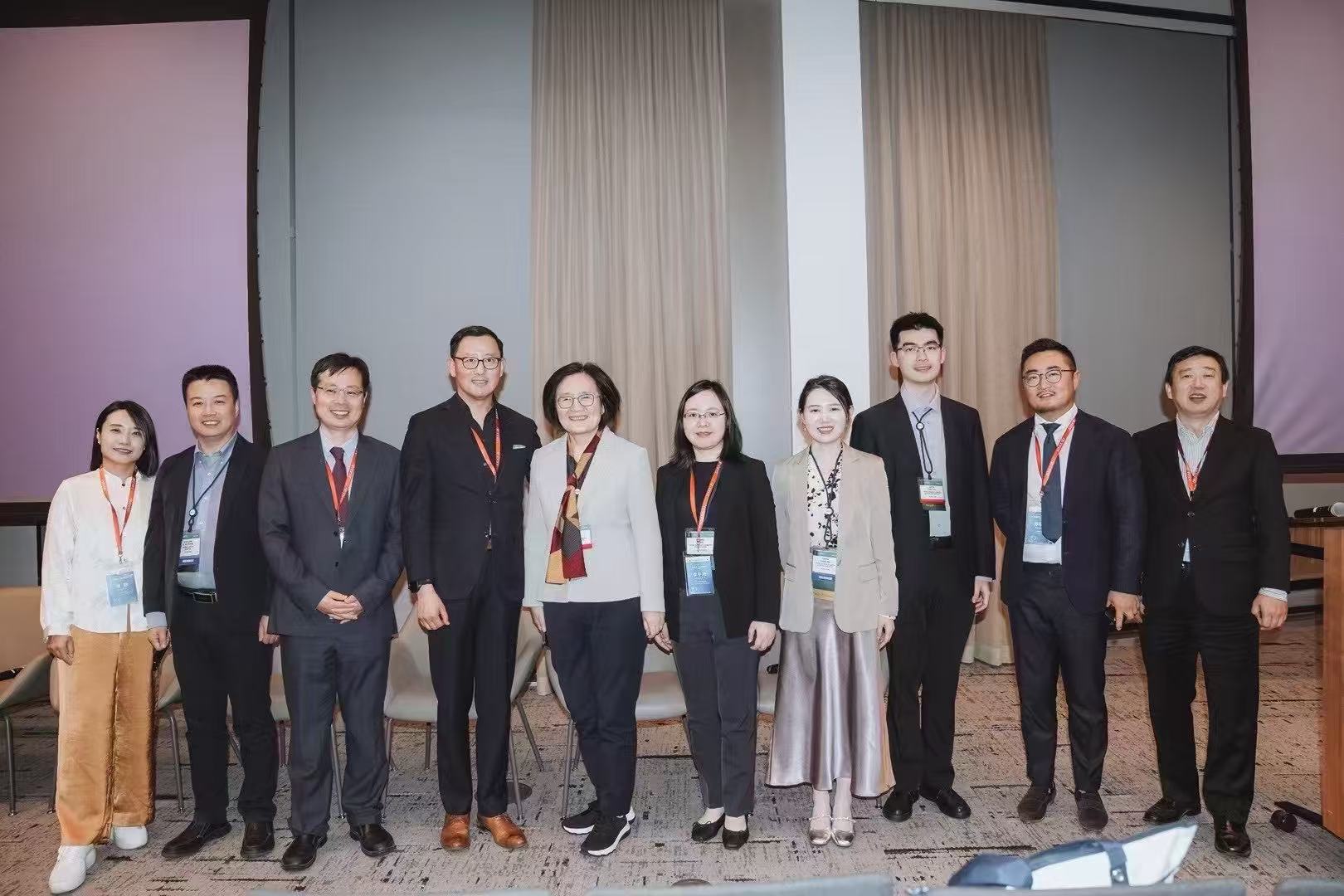
The summit brought together experts featured in ASCO 2025’s oral sessions and abstract presentations. Professors Xinan Sheng, Changsong Qi, Jing Pan, and Dongmei Ji from top Chinese institutions gave keynote speeches, recapturing ASCO 2025’s highlights. They shared groundbreaking research findings, China’s latest innovations in oncology, and insights into global trends in new drug development. These discussions collectively painted a visionary blueprint for the future of precision cancer medicine.


In-Depth Dialogues: Exploring China’s One-Stop Solutions

An interactive discussion session allowed for open global dialogue. Moderated by Mr. Xiaoyu Zheng, Professors Guo, Sheng, Qi, and Pan engaged in a deep discussion on “Entering China’s One-Stop Solutions.” They showcased how Chinese researchers are influencing global trial design and efficiency, and how collaboration with enterprises bridges the gap from lab to clinic. As researchers from GoBroad’s affiliated hospitals, the panelists detailed how GoBroad provides comprehensive local support for international projects, and expressed eagerness to deepen partnerships with overseas pharmaceutical companies to co-create a global innovation ecosystem in cancer research and treatment.


Youth Spotlight: USCACA ASCO Travel Award Ceremony

The summit featured a special “2025 USCACA ASCO Travel Award” ceremony. Dr. Panpan Zhang and Dr. Haoxin Peng from Peking University Cancer Hospital received the award, which honors young Chinese scholars who made outstanding contributions in translational or clinical cancer research at ASCO 2025.


Closing Remarks and Future Outlook

Professor Lin Shen delivered the closing remarks, summarizing the summit’s highlights and envisioning the future landscape of global oncology drug development. He encouraged more young Chinese researchers to become bridges for international exchange and congratulated everyone on the summit’s successful conclusion.

At ASCO 2025 and the “CHINA SUMMIT,” GoBroad Healthcare’s management and research teams showcased their capabilities and engaged in meaningful exchanges with global enterprises, research institutions, and industry experts. GoBroad’s one-stop IIT (Investigator-Initiated Trial) experience for overseas enterprises garnered wide attention. Moving forward, Gaobo Healthcare Group will continue working with global partners to advance high-quality oncology drug development. Through innovative technologies and its research hospital platform, Gaobo aims to enhance clinical trial efficiency and help bring more breakthrough therapies to patients around the world.


View
Dr. Changsong Qi: In 2025, China’s CAR-T Cell Therapy Leads the World — Breaking Through Solid Tumors Like Gastric and Pancreatic Cancer

Decoding the Blueprint of Life: CAR-T as a Precision Navigation System Starting from Hematologic Malignancies

 In the vast landscape of cancer immunotherapy, CAR-T cell therapy represents a transformative innovation. According to Dr. Changsong Qi of Peking University Cancer Hospital and Beijing GoBroad Hospital, its remarkable efficacy in hematologic malignancies stems from highly specific tumor-associated antigens such as CD19 (in acute lymphoblastic leukemia) and BCMA (in multiple myeloma), which serve as precise "navigation systems" for T cells.

"Essentially, the CAR construct reprograms T cells, enabling them to identify and eliminate tumor cells," explained Professor Qi. Once reinfused, these engineered T cells are able to precisely target and destroy tumor cells expressing these markers, achieving high response rates and sustained immune surveillance — a principle now validated by multiple commercial products and national regulatory frameworks.


The Challenge of Solid Tumors: Redefining the Role of CAR-T Therapy

Compared with hematologic cancers, the treatment of solid tumors is significantly more challenging, primarily due to:

  • The lack of ideal, broadly expressed tumor-specific targets
  • A highly immunosuppressive tumor microenvironment
  • Tumor heterogeneity and antigen escape

“We initially explored targets like EGFR, but early studies showed an objective response rate of less than 10%, coupled with severe toxicity,” Professor Qi acknowledged. However, breakthroughs have since emerged with novel targets in solid tumors — including Claudin18.2 (gastric cancer), GPC3 (hepatocellular carcinoma), and GUCY2C (colorectal cancer).

Claudin18.2 has proven to be one of the most promising targets in gastric cancer, with expression in nearly 60% of moderate-to-high Claudin18.2-positive cases. CT041, a CAR-T product developed against this target, has entered Phase II clinical trials. Among over 200 patients treated, the objective response rate has consistently ranged between 40–50% — more than tenfold higher than the 2–5% seen with third-line standard treatments.

In liver cancer, GPC3 is expressed in approximately 70% of hepatocellular carcinomas and is nearly absent in normal tissues, making it an ideal “window target” for CAR-T therapy. New generations of structurally optimized GPC3-CAR-T products have achieved objective response rates exceeding 70% in mid-to-high dose cohorts, significantly prolonging median survival.

For colorectal cancer, GUCY2C (also known as GCC) shows stable expression in 60–70% of patients across both primary and metastatic sites. Professor Qi's team is collaborating with industry partners to advance CAR-T products targeting GUCY2C, with early studies showing objective response rates of approximately 40%.


Innovative Delivery Routes: Paving the Way for CAR-T Cells to Reach Solid Tumors

 A key determinant of CAR-T efficacy lies in the ability to physically deliver cells to tumor sites. “Traditional intravenous infusion often proves inadequate for certain locations,” Professor Qi emphasized. “Targeted delivery strategies are essential.”

Several innovative administration routes are currently being explored in clinical settings:

  • Intraventricular injection: For intracranial tumors like neuroblastoma, CAR-T cells are infused directly into the brain ventricles to bypass the blood-brain barrier, enhance local effects, and minimize systemic toxicity.
  • Hepatic arterial infusion: Especially for liver cancers expressing GPC3, CAR-T cells are delivered through the hepatic artery to achieve high local concentrations.
  • Peritoneal/pleural infusion: Applicable to peritoneal metastases or thoracic tumors to maximize local efficacy.

In combination with debulking surgery, these approaches reduce tumor burden and improve the tumor microenvironment, ultimately enhancing CAR-T cell persistence and function.


Clinical Cases: Witnessing the Power of a “Living Drug”

 Dr. Qi shared several compelling clinical cases that vividly illustrate the life-altering potential of CAR-T therapy as a “living drug”:

  • A gastric cancer patient with anastomotic recurrence who was unable to eat regained the ability to consume porridge within just over a week following Claudin18.2-CAR-T infusion. One month later, rapid tumor regression even triggered bleeding — a dramatic confirmation of CAR-T's potent cytotoxicity.
  • Another patient, previously fully reliant on parenteral nutrition due to complete obstruction, resumed oral intake just seven days after treatment and went on to enjoy over two years of high-quality life.
  • A woman in her 30s, suffering from peritoneal metastases, renal failure, and carrying four drainage tubes, had all tubes removed within six months post-treatment and returned to work.

These examples demonstrate that CAR-T therapy is evolving from an experimental intervention into a modality capable of reconstructing lives.


Common Questions Answered: Helping More Patients Take the First Step

At the end of the interview, Professor Qi addressed several of the most pressing questions raised by patients:

On eligibility for clinical trials:
“Not all patients can enter clinical studies immediately,” he emphasized. “Target antigen testing is essential. Only when expression is confirmed can tumor burden and metastatic status be evaluated for trial inclusion.”

On 'pseudo-progression' post-treatment:
Some patients may initially show tumor enlargement on imaging. This is often due to CAR-T cell infiltration and inflammation rather than true disease progression. Imaging density and clinical symptoms are key to distinguishing between the two.

On timing and treatment duration:
“Unlike chemotherapy, CAR-T therapy involves a single infusion,”Professor Qi explained. “If the patient is stable, we recommend allowing time for the cells to act, rather than rushing into further treatment decisions.”


Closing Words: From Breakthrough to Cure, the Future of CAR-T Therapy Is Worth Pursuing

 Dr. Qi concluded with an encouraging message:“Today, we are no longer content with simply prolonging survival — we are striving for true functional cures. CAR-T therapy is opening up new possibilities in the treatment of solid tumors. As long as we keep exploring and hold on to hope, the dawn of better outcomes will surely come.”

 

View

We're here for you.

Get in touch.

We're here to make sure you are connected to the right people.

Request an Appointment